

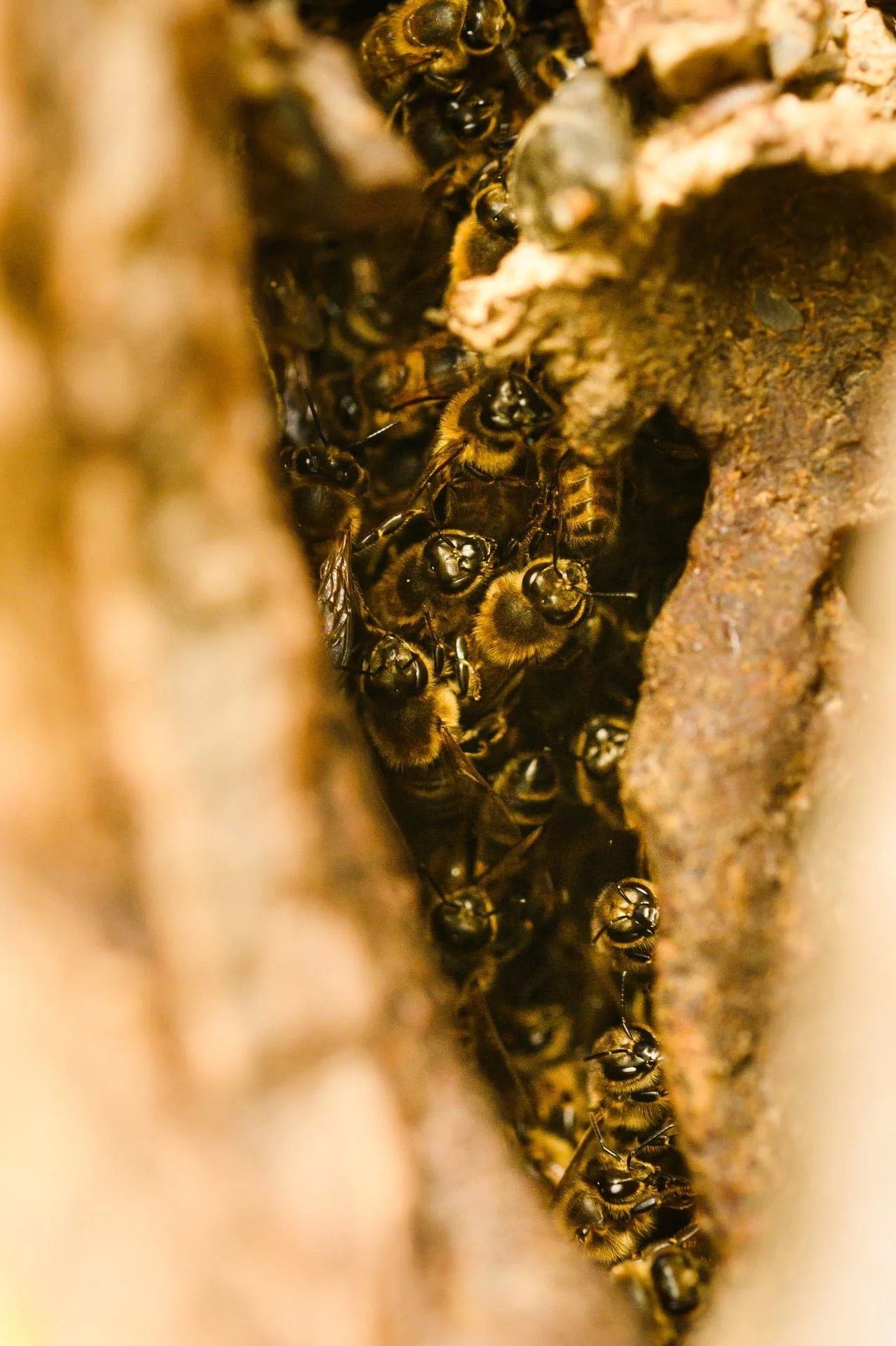
Honey Bee III
(Apis mellifera)
-
Before modern beekeeping, honey bees in the UK lived naturally in tree cavities like this one. For centuries, people gathered honey from wild colonies — a practice called “bee hunting.” Today, traditional and natural beekeeping is still practised across Britain, especially in Devon, Wales, Northumberland, and parts of Scotland, where hollow logs or skeps (straw hives) are still used by enthusiasts.
-
Although most honey bees in the UK now live in managed wooden hives, some colonies still thrive in tree hollows, church walls, chimneys, or old barns. These feral colonies often behave more like their wild ancestors and play a vital role in pollination.
-
Wild and kept honey bees forage for nectar and pollen across a wide range of flowers — including bramble, hawthorn, clover, wild marjoram, and tree blossoms like lime and chestnut. Their honey is made by evaporating nectar and sealing it in wax cells — a process unchanged for millions of years.