

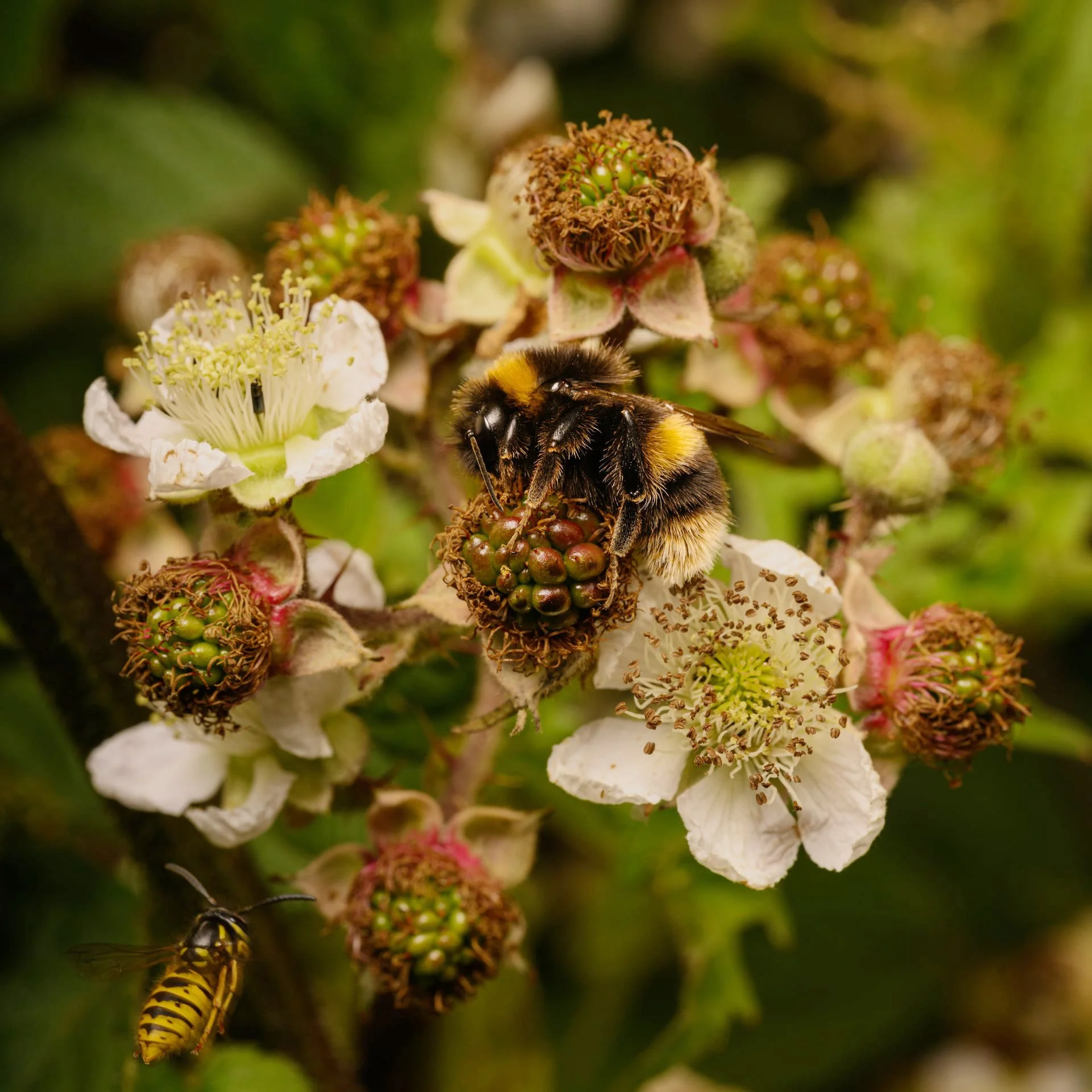
White-tailed Bumblebee
(Bombus lucorum)
-
The White-tailed Bumblebee is often considered the classic bumblebee due to its distinctive black body with two bright lemon-yellow bands and a clean white tail. Interestingly, what we commonly refer to as the White-tailed Bumblebee is actually a complex of three nearly identical species: Bombus lucorum, Bombus magnus, and Bombus cryptarum, which can only be reliably distinguished through DNA analysis.
-
This species is widespread across the UK and can be found in a variety of habitats, including gardens, parks, woodlands, farmland, and heathlands. They are among the earliest bumblebees to emerge in spring, with queens appearing as early as March, and can be seen foraging until late summer.
-
White-tailed Bumblebees are generalist foragers with a preference for open, shallow flowers due to their relatively short tongues. They commonly feed on plants such as clovers, knapweed, bramble, dandelions, and thistles. Occasionally, they may engage in "nectar robbing" by piercing the base of deep flowers to access nectar, bypassing the pollination process